Genealogy services · documented research
Genealogical research services
If you lack the time, live far from Romania, or have reached a research dead end, we turn the information you already have into a practical plan. We assess the sources, define concrete steps, and propose an honest offer with a clear objective and limits.
A clear process, transparent costs, and control at every stage.
Where should I start?
Not every genealogy question needs a paid service. Begin with the option that fits the difficulty, time, and access available to you.
Research it yourself
Search Genealogica’s database and source catalogs. Continue in the Encyclopedia / Wiki for methods, terminology, and guides.
Ask the community
Genealogy communities can offer clues, reading suggestions, and local experience for short questions. The Genealogica Forum is one of the communities you can ask.
Request individual assistance
Choose this path when the work requires systematic searching, physical archive access, difficult interpretation, or sustained research time.
What kind of research can we help with?
A well-defined research request starts with a document, a person, a locality, a family relationship, or a specific question. The scope and difficulty of the research cannot be assessed based on the number of generations alone.
Specific requests from the same area can sometimes be grouped together
Several specific requests for the same branch of the National Archives may sometimes be covered in a single visit, depending on scheduling, document request limits, and record availability. We confirm whether this is possible before the research begins.
 Civil registration record · Private archive
Research guidance and planning
Identify archives and collections of interest, assess what is available online or on site, and set out practical next steps.
Documents and archival research
We locate, verify, and photograph civil or parish records, archival files, registers, or records within clearly defined date ranges, while accurately documenting the sources consulted.
Transcription and interpretation
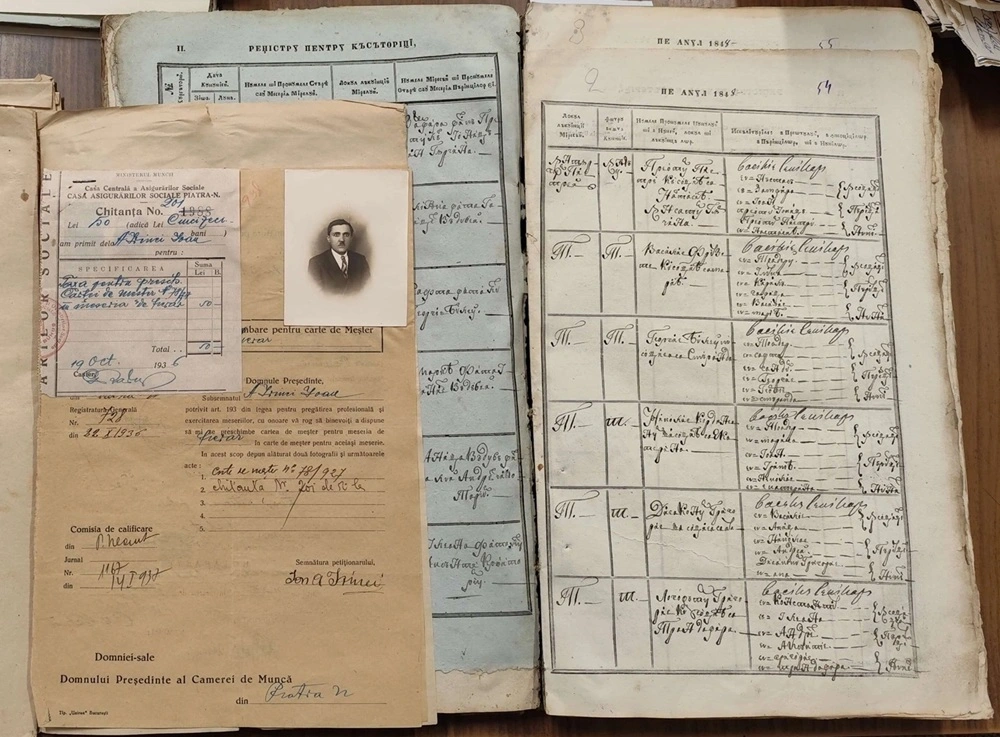
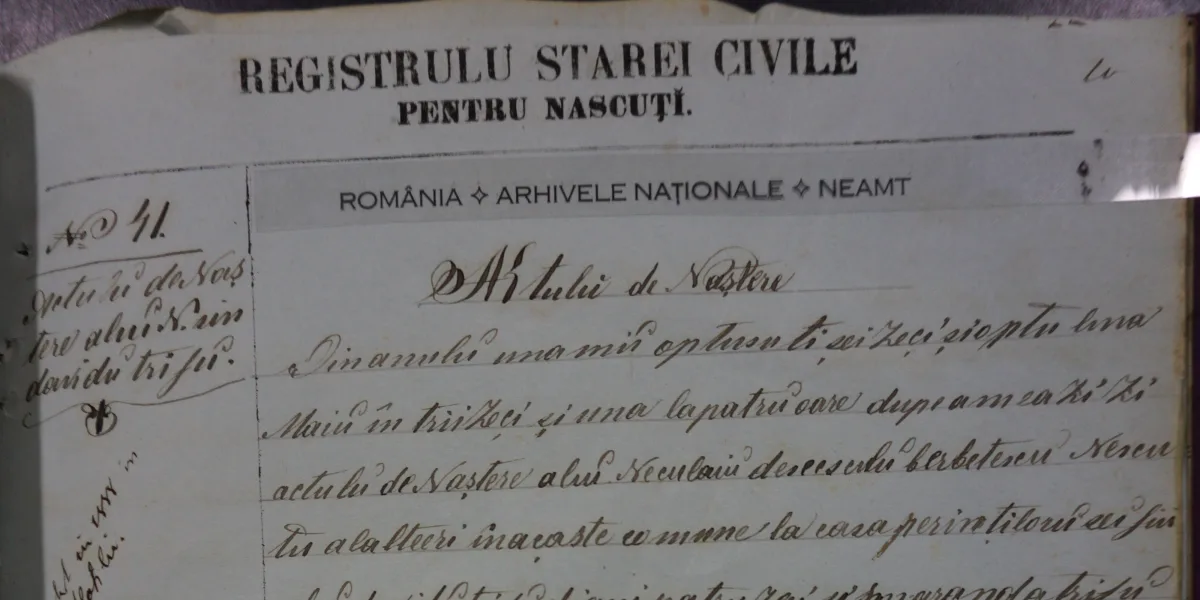
We transcribe and interpret documents, including those written in difficult or historical scripts such as Romanian Cyrillic paleography, and clarify abbreviations, name variants, place names, and marginal notes.
A focused genealogical question
Test a parentage hypothesis, distinguish namesakes, identify an origin locality, or investigate one clearly bounded family event.
Extended family research
We reconstruct, step by step, an individual’s life path or one or more branches of a family tree, using civil and parish records, censuses, military files, notarial records, newspapers, and other relevant sources.
When should you continue on your own, and when should you ask for help?
We encourage independent research when the sources are accessible and you have the time to learn the process. Individual research services are most useful when they help overcome a genuine obstacle in your research.
Continue researching yourself when…
- the sources are indexed, available online, or already described by Genealogica;
- you enjoy the process and can progress at your own pace;
- your question suits a genealogy community, including the Genealogica Forum;
- you want to remain directly involved in every choice and discovery.
You can first try a direct request to the archive. Romanian National Archives branches often answer focused requests sent by email when you clearly provide the record or event, names, date, and locality. If your details are reliable, you have time, and you can wait for the institution’s response, this route is worth trying before using an individual service. Procedures and response capacity may vary.
Professional help makes sense when…
- you live far from Romania or the source is available only in person;
- you lack time to examine a large amount of unindexed material;
- you have reached a dead end that requires alternative sources;
- handwriting, language, names, localities, or source context require interpretation;
- you need an answer to a defined question, not a vague promise.
What determines the time and difficulty of a search?
Two apparently similar requests may require very different effort. Time cannot be estimated only by people or generations; it depends on the actual condition and accessibility of the sources.
- 01 Starting information
- A precise locality and date narrow the search; broad estimates, namesakes, and spelling variants increase the material that must be checked.
- 02 Survival and access
- Registers may be missing, damaged, uncatalogued, restricted, or available only in a physical reading room.
- 03 Languages and scripts
- Romanian Cyrillic, Latin, Hungarian, German, Russian, Church Slavonic, and period handwriting may require different skills.
- 04 Historical and geographic context
- Border changes, historical place names, and transferred collections can lead the research across several institutions or present-day countries.
What happens when the request needs another specialist?
Genealogica does not claim every competence. When part of a case falls outside our expertise or access, we may suggest collaboration with or referral to an appropriate specialist.
This may involve:
- particular regions, archives, or institutions;
- palaeography and historical languages;
- military, social, local, or institutional history;
- certified translation or legally adjacent procedures;
- specialist historians, archivists, translators, or researchers.
How does a research project work?
We work step by step: define an achievable objective for the current stage, document what was checked, and decide whether to continue only when the documentary evidence supports it.
 Valea Seacă, 1950 · Private collection
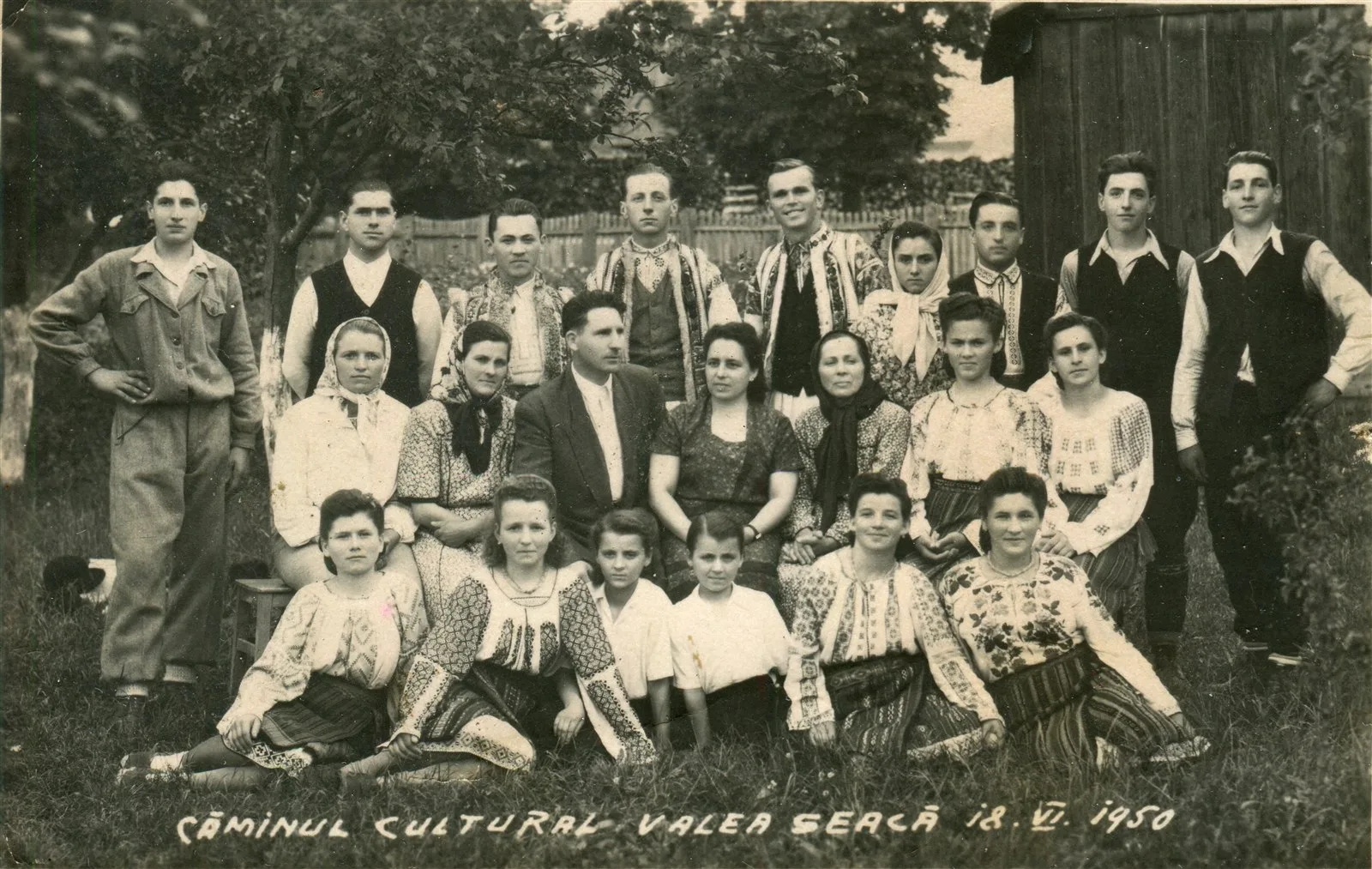
We connect people, places, and events, documenting each step and every source consulted.
-
01
Send what you know
Names, variants, places, dates, relationships, records, links, earlier searches, and the exact question you want answered.
-
02
Define the objective and limit
We assess feasibility and agree the sources, deliverables, fee structure, budget, and stopping point.
-
03
Research and document
We review the agreed sources. The findings may shape the next steps, but we do not change the research objective without your approval.
-
04
Receive the results
We provide the available copies, source references, conclusions, unsuccessful searches, uncertainties, and, where relevant, options for further research.
A verifiable research trail
What do you receive?
The format depends on the request, but the result should remain clear, usable, and verifiable after delivery.
- Photographs or copies where access and reproduction rules allow
- Exact archival references and source citations
- Registers, files, collections, and date ranges checked
- Transcription, extraction, or interpretation as agreed
- Context for names, places, source types, and findings
- A concise summary or fuller report, depending on the case
- Visual family charts or timelines when they clarify relationships and the sequence of events
- A GEDCOM file for import into genealogy software when the agreed deliverable includes a structured family tree
- Unsuccessful searches and sources that could not be checked
- Unresolved questions and recommended next steps
Research cannot guarantee a discovery
The service covers the agreed research time and process, not a promised ancestor, record, or conclusion. A document may not survive, may be inaccessible, or may contain too little information for a secure identification.
We report unsuccessful searches with the same care as discoveries. A negative result narrows the hypotheses and prevents repeated work. A probable result will be labelled probable rather than presented as certain.
How are the fee and budget established?
We do not price a family tree only by generations or promise standard packages. The fee structure depends on how precisely the task can be defined and how much uncertainty surrounds the sources.
You receive a proposal before deciding
After reviewing the starting information, we clarify the objective, intended sources, deliverables, work limit, and any external expenses. The initial assessment is free of charge and does not oblige you to proceed.
Fixed fee
For a clear and feasible task with a known source or range and a well-defined deliverable.
Agreed budget
For a focused question researched up to a set time or cost limit. We report what could be checked within that limit.
Staged research
For exploratory cases where the next source depends on the findings. Each stage has its own objective and stopping point.
What can change the time and fee?
- precision of the starting names, dates, and localities;
- availability of tables, indexes, and catalogs;
- online, remote, or reading-room-only access;
- size, name frequency, and legibility of the material;
- need for alternative sources or specialist interpretation;
- travel, consultation, reproduction, or institutional charges.
Archive, travel, reproduction, or collaboration expenses are listed separately when they apply. Research does not extend beyond the agreed limit without your approval.
Billing. Accepted services are currently supplied and invoiced by CUCURUZ ANDREI-IONUT PERSOANĂ FIZICĂ AUTORIZATĂ, a Romanian sole trader (PFA). Full fiscal details appear in the proposal and on the invoice.
Frequently asked questions
Answers about results, timing, documents, limits, and the information needed for a realistic assessment.
Can you guarantee a specific number of generations?
No. How far the research can progress depends on the survival, accessibility, and content of the records available for each family and locality. In some cases, we may be able to trace a family much further back; in others, a single missing link may limit or halt the research. This is why we work with research goals defined in stages rather than guaranteeing a specific number of generations.
Can you guarantee a record or confirm my hypothesis?
No. We can guarantee which sources and date ranges will be checked and how the work will be documented. We cannot guarantee that the record survives, is accessible, or contains the expected proof.
Can I request research for a single document?
Yes. Locating a civil or parish record, checking a specific archival file or register, or obtaining a copy can be a complete standalone request, provided the initial information is sufficient.
How long does research take?
It depends on access, archive appointments, document ordering, the amount of material, and whether alternative sources are needed. The initial assessment can define a realistic stage or range, but not guarantee a date when third-party institutions control access.
Can several small archival requests be grouped together?
Sometimes. Requests concerning the same archive branch or area may be combined into a single visit, provided scheduling, document request limits, procedures, and record availability allow it.
What information should I provide?
Please send full names and known variants, localities, dates or approximate date ranges, family relationships, religion if known, any documents you already have, relevant links, and sources that have already been checked. Most importantly, state as clearly as possible the question you want the research to answer.
Will I receive the original documents?
Generally, you will receive photographs, scans, or copies, where reproduction is permitted by the institution holding the records. The original documents remain with the archive, parish, or their owner, and some institutions may impose restrictions on photography or reproduction.
Can you research living people or contemporary relatives?
Access to recent records and information about living individuals is often restricted by law, privacy periods, and institutional rules. We can assess which sources may be consulted legitimately and, where access must be requested personally by you or an eligible relative, we can guide you through the relevant institutions, procedures, and steps for attempting to obtain the records.
Can you work with other languages or old scripts?
Yes. We can work with documents in several languages and historical scripts, depending on the expertise available within our team or through specialized collaborators. If additional expertise or a certified translation is required, this will be clarified before the research continues.
What happens if nothing is found?
You receive the sources and date ranges checked, the limitations encountered, and the correct conclusion for that stage. An unsuccessful search can eliminate a hypothesis, prevent duplicated work, and point to an alternative source.
What happens if another specialist is needed?
We explain the limit of our competence and, where possible, suggest suitable collaboration or referral. You will know who is working, what their part covers, and whether there is a separate cost.
Tell us what you want to find out
Your initial message involves no commitment. Based on the information you provide, we can assess whether independent research, a specific request, or a broader research project carried out in stages would be most appropriate.
Send a requestInclude, where possible:
- full names and known spelling variants
- locality, parish, or region
- known dates or a realistic date range
- relevant family relationships
- existing records and relevant links
- sources already checked
- the exact question you want the research to answer